
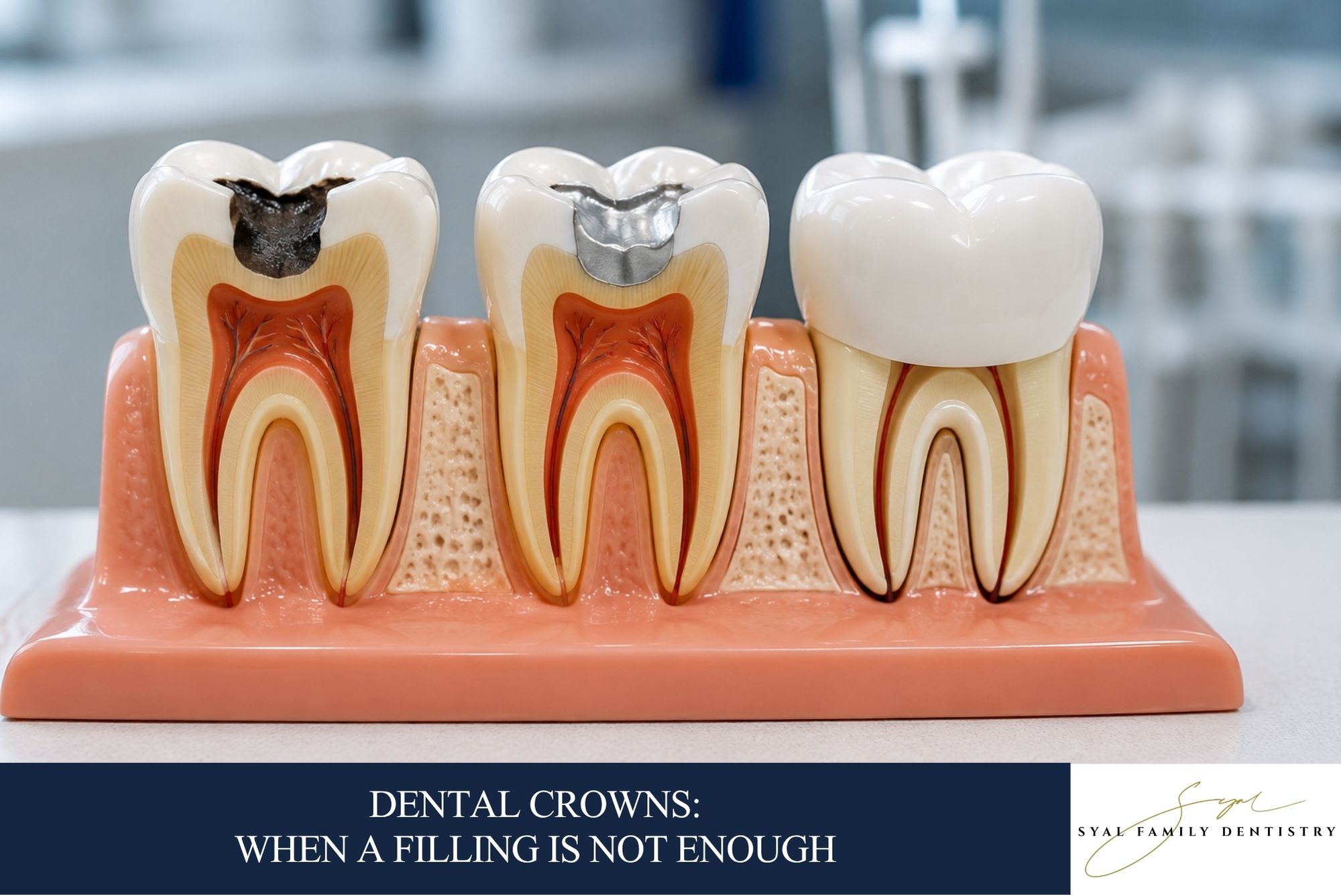
 A damaged tooth does not always need to be removed, but it does need the right type of restoration. While dental fillings are excellent for repairing small cavities and minor areas of tooth damage, they are not designed to restore teeth that have lost significant structure. When a tooth becomes too weak, cracked, or extensively decayed, a dental crown provides the strength and protection needed to preserve the tooth for years to come.
At Syal Family Dentistry, we help patients throughout Santa Rosa, CA restore damaged teeth with durable, natural-looking dental crowns. Our goal is always to preserve your natural teeth whenever possible while restoring their function, appearance, and long-term health.
What Is a Dental Crown?
A Protective Restoration That Covers the Entire Tooth
A dental crown is a custom-made restoration that completely covers the visible portion of a damaged tooth. Unlike a filling, which only replaces the missing area affected by decay, a crown surrounds the entire tooth to restore its strength, shape, and appearance.
Dental crowns are designed to:
- Strengthen weakened teeth
- Prevent fractures from worsening
- Restore chewing ability
- Improve appearance
- Protect teeth after extensive dental treatment
Modern crowns are made from durable materials such as porcelain or ceramic that closely resemble natural tooth enamel, providing both strength and excellent aesthetics.
When Is a Filling Enough?
Small Areas of Damage Can Often Be Repaired Conservatively
Dental fillings remain one of the most common restorative treatments because they effectively repair teeth with minor to moderate decay. During treatment, the damaged portion of the tooth is removed and replaced with a tooth-colored composite material.
A filling is generally appropriate when:
- The cavity is relatively small.
- Most of the healthy tooth structure remains intact.
- The tooth has not cracked significantly.
- The biting surfaces remain strong enough to withstand normal chewing forces.
Because fillings preserve more natural tooth structure, dentists prefer them whenever they can provide a predictable long-term outcome.
When Is a Crown the Better Choice?
Extensive Damage Requires Additional Protection
As cavities become larger, less healthy tooth structure remains to support a filling. Large fillings place significant stress on the remaining tooth, increasing the risk of fractures during everyday chewing.
A dental crown becomes the better solution when the tooth has lost too much structural support.
Your dentist may recommend a crown if you have:
- A large cavity involving multiple surfaces
- A cracked or fractured tooth
- A tooth weakened by an older, failing filling
- Significant tooth wear from grinding or clenching
- A tooth treated with root canal treatment
- A broken cusp or large portion of missing enamel
Rather than repeatedly replacing large fillings as they fail, a crown provides comprehensive protection for the entire tooth.
Why Large Fillings Can Eventually Fail
Bigger Restorations Leave Less Natural Tooth Behind
Every tooth relies on healthy enamel to withstand the tremendous pressure created during chewing. As fillings become larger, they replace more of that natural support.
Over time, large fillings can contribute to:
- Cracked teeth
- Broken filling margins
- Tooth fractures
- Recurrent decay around the restoration
- Tooth sensitivity
- Bite problems
A crown redistributes chewing forces across the entire tooth, helping reduce stress on weakened areas.
Dental Crowns After Root Canal Treatment
Protecting Teeth That Have Been Saved
One of the most common reasons for placing a dental crown is following root canal treatment.
A root canal removes infected or inflamed tissue from inside the tooth while preserving the natural root. Although the infection is eliminated, the tooth often becomes more brittle because it has lost internal structure.
Without a crown, many back teeth become vulnerable to fractures after root canal treatment.
A custom crown seals and protects the treated tooth while restoring full chewing function.
Signs You May Need a Dental Crown
Common Symptoms That Should Not Be Ignored
Not every damaged tooth causes severe pain. Many patients continue chewing on weakened teeth without realizing they are at risk for fractures.
You should schedule a dental evaluation if you notice:
- Pain when biting
- A cracked tooth
- A large broken filling
- Repeated fillings in the same tooth
- Tooth sensitivity that continues after a filling
- Visible fractures
- Chipped cusps
- Darkening of a tooth after injury
Early treatment often allows the tooth to be restored before a more serious fracture develops.
What Happens During the Crown Procedure?
Step 1: Comprehensive Evaluation
Your dentist examines the tooth using digital X-rays and a clinical evaluation to determine whether a crown is the best treatment option.
If infection or advanced decay is present, additional treatment such as root canal therapy may be recommended first.
Step 2: Preparing the Tooth
The damaged portions of the tooth are removed while preserving as much healthy structure as possible.
The remaining tooth is carefully shaped so the custom crown fits precisely.
Step 3: Digital Impressions
Accurate impressions are taken to create a crown that matches your bite, neighboring teeth, and natural smile.
The restoration is customized for:
- Color
- Shape
- Size
- Bite alignment
Step 4: Temporary Crown
While your permanent crown is being fabricated, a temporary crown protects the prepared tooth.
Step 5: Final Placement
Once your permanent crown is ready, it is carefully checked for fit, comfort, and appearance before being permanently bonded into place.
The result is a strong, functional restoration that looks like a natural tooth.
Types of Teeth That Often Need Crowns
Molars
Back teeth experience the greatest chewing pressure and commonly require crowns after large cavities or root canal treatment.
Premolars
These teeth absorb heavy chewing forces and often benefit from crowns when significant damage occurs.
Front Teeth
Anterior crowns restore teeth damaged by trauma, fractures, or large areas of decay while maintaining a natural appearance.
How Long Do Dental Crowns Last?
Excellent Longevity with Proper Care
High-quality dental crowns are designed to provide many years of reliable service.
Their lifespan depends on several factors, including:
- Daily oral hygiene
- Regular dental cleanings
- Bite forces
- Teeth grinding
- Diet
- Overall oral health
Many crowns continue functioning well for 10 to 15 years or longer with proper maintenance.
Caring for Your Dental Crown
Protecting Your Investment
Although crowns cannot develop cavities themselves, the natural tooth underneath remains susceptible to decay near the margins.
Proper care includes:
- Brushing twice daily
- Flossing around the crown every day
- Attending routine dental examinations
- Receiving professional cleanings
- Wearing a nightguard if you grind your teeth
- Avoiding chewing on ice or hard objects
Good oral hygiene also reduces the risk of gum disease treatment becoming necessary around crowned teeth.
Can a Crown Prevent Tooth Extraction?
Saving Teeth Whenever Possible
One of the primary goals of restorative dentistry is preserving natural teeth.
When a damaged tooth still has healthy roots and sufficient remaining structure, a dental crown often prevents extraction by strengthening and protecting the tooth before additional damage occurs.
Prompt treatment frequently allows patients to avoid more extensive procedures.
Why Early Treatment Matters
Waiting Can Lead to More Complex Dental Problems
Small fractures and large cavities rarely improve on their own.
Delaying treatment can result in:
- Larger cracks
- Tooth infections
- Root canal treatment
- Emergency dental visits
- Tooth loss
- More extensive restorative procedures
Seeking care early allows conservative treatment before damage becomes irreversible.
If you experience sudden tooth pain or break a tooth, an emergency dentist can evaluate the problem quickly and recommend the most appropriate solution.
Why Choose Syal Family Dentistry for Dental Crowns in Santa Rosa?
Personalized Restorative Dentistry Close to Home
At Syal Family Dentistry, we believe every restoration should protect your oral health while blending naturally with your smile. We provide comprehensive restorative care for patients throughout Santa Rosa and the surrounding communities, offering personalized treatment plans based on each patient’s needs.
Whether you require a simple filling, root canal treatment followed by a crown, gum disease treatment to improve your oral health, or clear aligners as part of a comprehensive smile plan, our team is committed to delivering comfortable, high-quality care using modern techniques and materials.
Frequently Asked Questions
How do I know if I need a filling or a crown?
Only a dental examination and X-rays can determine which treatment is appropriate. Small cavities are usually restored with fillings, while larger areas of damage often require crowns for long-term protection.
Does getting a dental crown hurt?
The procedure is performed using local anesthesia to keep you comfortable. Most patients experience little discomfort during treatment.
Can a crown replace a missing tooth?
No. A crown restores an existing tooth. If a tooth is missing, treatment options may include a dental implant, bridge, or other restorative solution.
Can a crown fall off?
Although uncommon, crowns can loosen if the cement wears down or the underlying tooth changes. If your crown comes off, contact your dentist promptly for evaluation.
Are crowns better than fillings?
Neither treatment is universally better. Fillings are ideal for small cavities, while crowns provide superior protection for teeth that have lost significant structure.
Will my crown look natural?
Yes. Modern porcelain and ceramic crowns are carefully matched to the color and shape of your surrounding teeth for a seamless appearance.
Can I eat normally after getting a crown?
Once the permanent crown is bonded and your dentist confirms the fit, you can typically resume eating most foods while avoiding habits that could damage any natural teeth or restorations.
How can I make my dental crown last longer?
Brush and floss daily, attend regular dental checkups, avoid chewing hard objects, and wear a nightguard if you grind your teeth.
Contact Information
Syal Family Dentistry
1400 Townview Lane
Santa Rosa, CA 95405
Phone: (707) 578-8100
Website: https://syalfamilydentistry.com
Request An Appointment: https://syalfamilydentistry.com/new-patients/appointments/


