
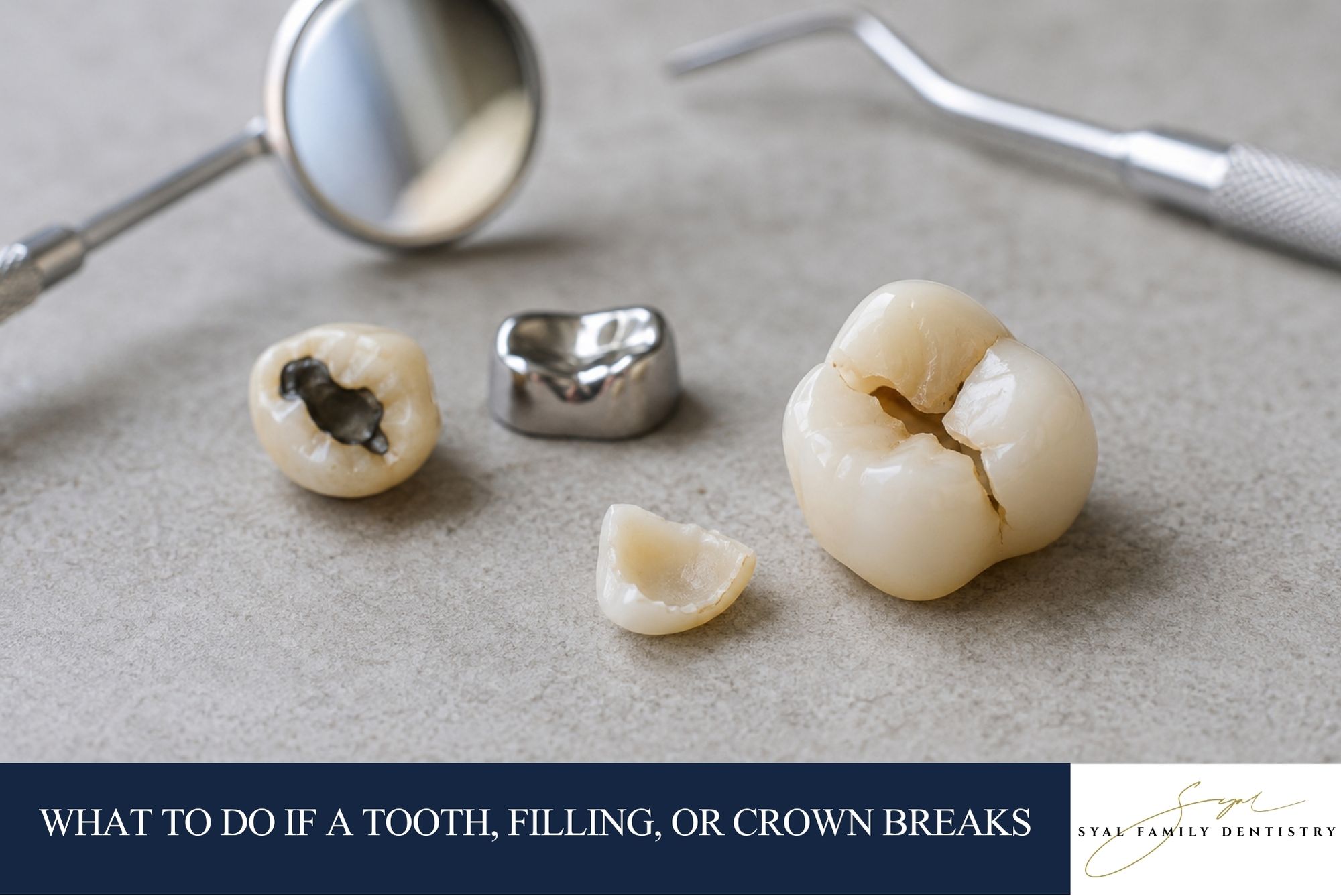
 A broken tooth, filling, or dental crown can happen unexpectedly while eating, playing sports, or even from biting into something harder than expected. Although some breaks seem minor, they can quickly become more serious if bacteria enter the damaged tooth or if additional pieces fracture. Knowing what to do immediately after the damage occurs can help reduce discomfort and improve the chances of saving your tooth.
At Syal Family Dentistry, we provide comprehensive dental care for patients throughout Santa Rosa, CA, including emergency dentistry, dental crowns, root canal treatment, gum disease treatment, clear aligners, and preventive care. If you experience a broken tooth, lost filling, or damaged crown, seeking prompt professional care is the best way to protect your smile.
Why Teeth, Fillings, and Crowns Break
Teeth Experience Significant Daily Stress
Your teeth are incredibly strong, but they are not indestructible. Every day, they withstand hundreds of pounds of pressure during chewing. Over time, repeated stress, existing dental work, decay, and accidents can weaken teeth and restorations.
Common causes of broken teeth or restorations include:
- Biting hard foods such as ice, popcorn kernels, or hard candy
- Teeth grinding (bruxism)
- Sports injuries
- Falls or other accidents
- Untreated cavities weakening the tooth structure
- Large, older fillings wearing down
- Normal wear after years of use
- Sudden temperature changes that create tiny fractures
Even high-quality dental restorations eventually experience wear and may require replacement after many years of service.
Different Types of Dental Breaks
Minor Tooth Chips
Small chips often affect only the enamel and may not cause pain. While they may seem cosmetic, sharp edges can irritate your tongue or cheeks and should still be evaluated by your dentist.
Cracked Teeth
Cracks vary from tiny surface lines to deeper fractures extending into the inner layers of the tooth. Some cracks are difficult to detect but can worsen over time without treatment.
Broken Teeth
A significant portion of the tooth may break away, exposing sensitive dentin or even the pulp containing nerves and blood vessels.
Lost or Broken Fillings
Fillings can loosen or fracture due to age, decay beneath the restoration, or excessive chewing forces. Once a filling is lost, the exposed tooth becomes much more vulnerable to decay and sensitivity.
Broken or Loose Dental Crowns
Crowns protect weakened teeth after large restorations or root canal treatment. While durable, crowns can loosen, crack, or come off because of wear, underlying decay, trauma, or cement failure.
What to Do Immediately After a Tooth Breaks
Stay Calm and Assess the Damage
The first step is determining the severity of the injury. If there is heavy bleeding, severe pain, or facial trauma, seek emergency medical attention if necessary before contacting your dentist.
Rinse Your Mouth
Gently rinse with warm water to remove debris and keep the area clean.
Save Any Broken Pieces
If you find pieces of your tooth, filling, or crown, place them in a clean container. While they cannot always be reattached, bringing them to your appointment may help your dentist evaluate the damage.
Control Bleeding
If bleeding occurs, gently apply clean gauze with light pressure for several minutes.
Reduce Swelling
Apply a cold compress to the outside of your face for 15-20 minutes at a time to minimize swelling and discomfort.
Protect the Tooth
If the broken edge feels sharp, dental wax available at most pharmacies can temporarily cover the area until you are seen.
Avoid Chewing on That Side
Choose soft foods and avoid chewing with the affected tooth until treatment is completed.
What to Do If a Filling Falls Out
Keep the Area Clean
Food easily becomes trapped in the open space left by a missing filling. Brush gently and rinse after eating.
Avoid Sticky or Hard Foods
These foods can cause additional damage to the weakened tooth.
Use Temporary Dental Filling Material
Many pharmacies sell temporary dental repair kits designed for short-term protection. These products should never replace professional treatment.
Schedule an Appointment Promptly
A lost filling leaves the tooth vulnerable to further decay, fractures, and infection. Early treatment often allows for a simpler repair.
What to Do If a Crown Comes Off
Retrieve the Crown
If possible, locate the crown and rinse it carefully with water.
Do Not Force It Back Into Place
Attempting to permanently reseat the crown yourself can damage the tooth or prevent proper fitting later.
Keep the Tooth Clean
The exposed tooth may be sensitive to hot, cold, or pressure. Continue brushing gently around the area.
Temporary Dental Cement
Some pharmacies carry temporary dental cement that may help hold a crown in place briefly until your appointment. Avoid using household glues or adhesives.
When a Broken Tooth Becomes a Dental Emergency
Seek Immediate Dental Care If You Experience:
- Severe or persistent pain
- Significant swelling
- Uncontrolled bleeding
- A tooth broken near the gumline
- A large portion of the tooth missing
- A knocked-out tooth
- Signs of infection such as swelling, pus, or fever
- Difficulty closing your bite properly
Prompt emergency dental care can often prevent tooth loss and reduce the need for more extensive treatment.
How Dentists Repair Broken Teeth
Dental Bonding
Small chips and minor fractures can often be repaired using tooth-colored composite resin that blends naturally with surrounding teeth.
Dental Fillings
If decay or a lost filling caused the problem, replacing the filling restores the tooth’s strength and function.
Dental Crowns
Larger fractures often require a custom dental crown to completely protect the remaining healthy tooth structure. Crowns restore appearance, strength, and chewing ability while helping prevent additional fractures.
Root Canal Treatment
If the fracture extends into the pulp, bacteria can infect the nerve tissue. Root canal treatment removes the damaged tissue, preserves the tooth, and is typically followed by placement of a dental crown for long-term protection.
Tooth Extraction
When a tooth cannot be saved due to severe damage, extraction may be the healthiest option. Your dentist can discuss replacement options such as dental implants or bridges to restore your smile.
How Broken Restorations Can Affect Your Oral Health
Delaying Treatment Creates Additional Problems
Ignoring a broken tooth or restoration often allows the problem to worsen. Potential complications include:
- Progressive tooth fractures
- Increased sensitivity
- Tooth infections
- Dental abscesses
- Gum irritation
- Bite changes
- More expensive restorative treatment later
Prompt care often leads to better outcomes and more conservative treatment.
Preventing Future Breaks
Protect Your Smile Every Day
Many dental emergencies can be prevented through good oral health habits and preventive care.
Helpful prevention strategies include:
- Schedule routine dental examinations and cleanings
- Wear a custom night guard if you grind your teeth
- Use a sports mouthguard during athletic activities
- Avoid chewing ice and other hard objects
- Treat cavities before they become extensive
- Replace worn or damaged fillings before they fail
- Maintain excellent oral hygiene to reduce decay and gum disease
Patients interested in improving bite alignment with clear aligners may also reduce uneven biting forces that contribute to excessive wear on certain teeth.
Why Prompt Emergency Dental Care Matters
Early Treatment Protects Your Natural Teeth
The sooner a broken tooth, filling, or crown is treated, the greater the likelihood that conservative treatment will successfully preserve your natural tooth. Delaying care often allows cracks to deepen, bacteria to spread, and damage to become more extensive.
At Syal Family Dentistry, we provide compassionate emergency dental care for patients throughout Santa Rosa, helping restore comfort and protect long-term oral health. Whether you need a filling replaced, a new dental crown, root canal treatment, or evaluation of a cracked tooth, our experienced team is ready to help you return to smiling comfortably.
Frequently Asked Questions
Is a broken tooth always considered a dental emergency?
Not every broken tooth is a true emergency, but every fracture should be evaluated promptly. Even small cracks can worsen over time or allow bacteria to enter the tooth.
Can I wait a few days before seeing the dentist?
It is best to schedule an appointment as soon as possible. Delaying treatment increases the risk of infection, additional fractures, and more complex treatment.
What if my broken tooth doesn’t hurt?
Pain is not always present. Some fractures affect only the enamel initially but can progress deeper into the tooth if left untreated.
Can a broken crown be repaired?
In some situations, an existing crown can be recemented if it remains intact and the underlying tooth is healthy. Otherwise, a new crown may be recommended.
Is it safe to glue my crown back on?
No. Household adhesives are not safe for use in the mouth and can damage the tooth or interfere with proper dental treatment.
Will I need a root canal after breaking a tooth?
Not necessarily. Root canal treatment is only recommended if the pulp has become infected or significantly damaged.
How long do dental crowns typically last?
With excellent oral hygiene and regular dental visits, many crowns last between 10 and 15 years or longer, although longevity varies based on individual habits and oral health.
Can clear aligners cause teeth to break?
When properly planned and supervised by a dentist, clear aligners do not cause teeth to break. However, teeth that already have large fillings or untreated decay may be more susceptible to fractures regardless of orthodontic treatment.
What foods should I avoid until my appointment?
Avoid hard, crunchy, sticky, or chewy foods. Choose softer foods and chew on the opposite side whenever possible.
How can I reduce my risk of future dental emergencies?
Regular dental checkups, early cavity treatment, wearing protective mouthguards, maintaining healthy gums, and replacing worn restorations before they fail all help reduce the likelihood of future emergencies.
Contact Information
Syal Family Dentistry
1400 Townview Lane
Santa Rosa, CA 95405
Phone: (707) 578-8100
Website: https://syalfamilydentistry.com
Request an Appointment: https://syalfamilydentistry.com/new-patients/appointments/


