
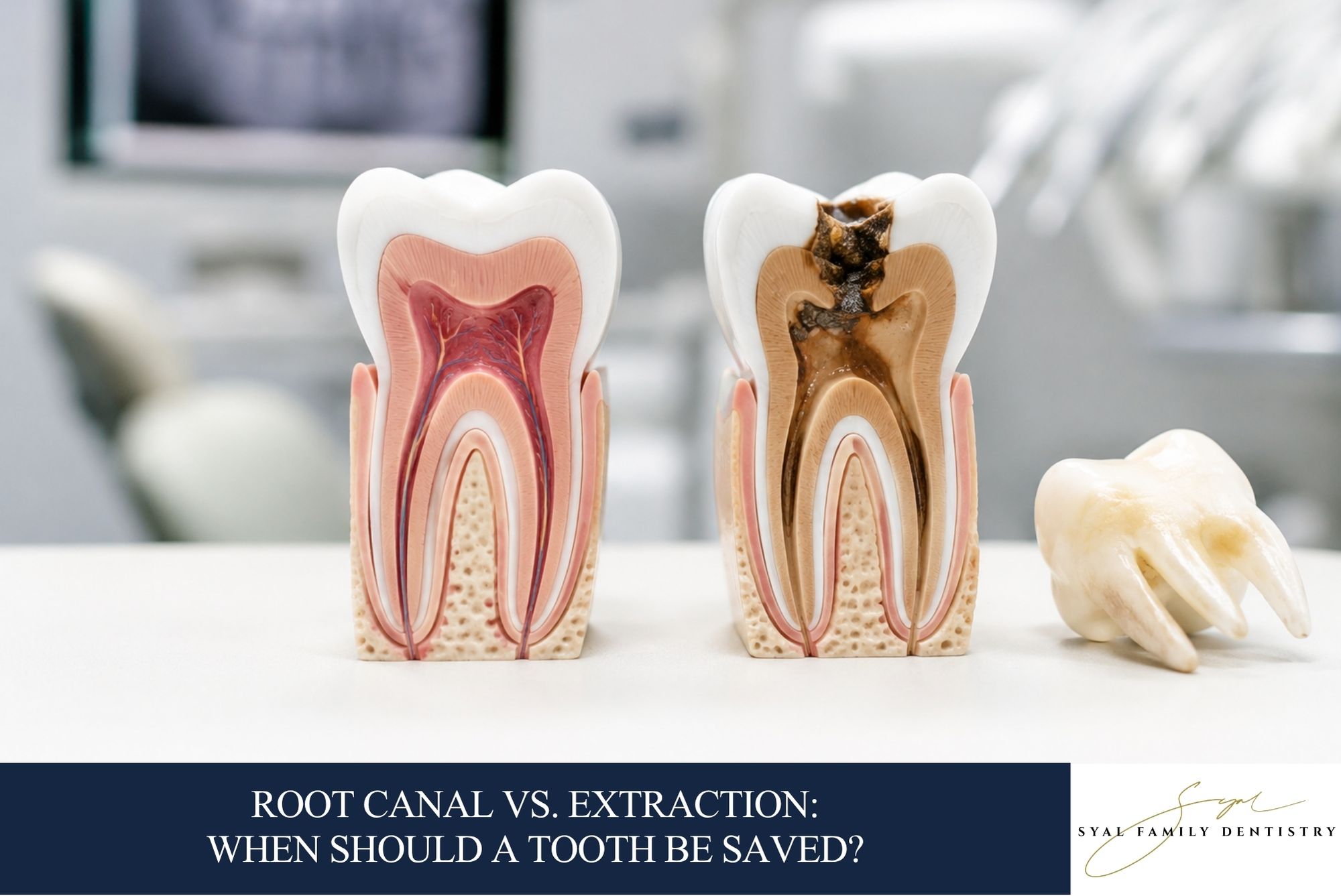
 When a tooth becomes severely damaged or infected, one of the first questions many patients ask is, “Should I get a root canal or have the tooth removed?” While both treatments can relieve pain and eliminate infection, preserving your natural tooth is often the healthiest long-term solution whenever possible.
At Syal Family Dentistry, we help patients in Santa Rosa understand all of their treatment options so they can make informed decisions about their oral health. Whether you need root canal treatment, a dental crown, or an emergency dentist for sudden tooth pain, our goal is to restore your smile while protecting your long-term dental health.
Why Saving a Natural Tooth Is Usually the Best Option
Modern dentistry focuses on preserving natural teeth whenever they can be successfully treated. Your natural teeth are uniquely designed to function with your jawbone, bite, and surrounding teeth. Keeping them helps maintain proper chewing, speaking, and facial structure.
A healthy natural tooth also helps prevent neighboring teeth from shifting out of position and reduces the need for more complex restorative procedures in the future.
Whenever possible, dentists recommend saving a tooth before considering extraction.
What Is Root Canal Treatment?
Root canal treatment removes infected or inflamed tissue from inside the tooth while preserving the healthy outer structure. Inside every tooth is soft tissue called the dental pulp, which contains nerves and blood vessels. When bacteria reach this area due to deep decay, fractures, trauma, or repeated dental procedures, infection develops.
During treatment, your dentist:
- Removes the infected pulp
- Cleans and disinfects the inside of the tooth
- Seals the canals to prevent future infection
- Restores the tooth with a dental crown in most cases
Today’s root canal procedures are performed with advanced techniques and local anesthesia, making treatment much more comfortable than many people expect.
When Is a Root Canal Recommended?
Root canal therapy is often the preferred treatment when:
Deep Decay Has Reached the Nerve
Untreated cavities can eventually extend into the pulp, causing severe pain and infection.
The Tooth Has Been Injured
Cracks, fractures, or traumatic injuries can expose the pulp even if the outside of the tooth appears relatively intact.
An Abscess Has Formed
A dental abscess develops when infection spreads beyond the tooth and into surrounding tissues. Root canal treatment can eliminate the infection while preserving the tooth.
Persistent Tooth Pain Is Present
Pain while chewing, lingering sensitivity to hot or cold, swelling, or tenderness may indicate that the tooth’s pulp has become infected.
Benefits of Saving a Tooth with Root Canal Treatment
Choosing root canal therapy when appropriate offers several advantages.
Maintains Natural Function
Your natural tooth continues to function normally for chewing and speaking.
Preserves Jawbone Health
Keeping the tooth root stimulates the surrounding jawbone and helps reduce bone loss.
Protects Bite Alignment
Neighboring teeth remain properly positioned, reducing future orthodontic concerns.
Long-Term Success
With proper care, a root canal-treated tooth can often last for decades or even a lifetime.
Cost-Effective Over Time
Although treatment involves multiple steps, preserving your natural tooth often avoids the higher long-term costs associated with replacing an extracted tooth.
When Is Tooth Extraction Necessary?
Despite every effort to preserve natural teeth, extraction is sometimes the healthiest option.
Severe Structural Damage
If a tooth has fractured below the gumline or has insufficient healthy structure remaining, restoration may not be possible.
Advanced Gum Disease
Severe periodontal disease can destroy the bone and supporting tissues around a tooth, making it too loose to save.
Patients with advanced gum disease treatment needs may require extraction before beginning periodontal therapy and future tooth replacement.
Extensive Infection
Occasionally, infection has destroyed too much of the tooth or surrounding bone for successful root canal treatment.
Failed Previous Treatment
Some previously treated teeth develop recurrent infections that cannot be successfully retreated.
Impacted or Non-Restorable Teeth
Certain wisdom teeth or severely damaged teeth cannot be predictably restored.
What Happens After an Extraction?
Removing a tooth solves the immediate infection or damage, but it also leaves an empty space that should usually be replaced.
Replacement options include:
Dental Implants
Implants provide one of the closest replacements to a natural tooth and help preserve jawbone.
Dental Bridges
A bridge replaces the missing tooth using crowns placed on adjacent teeth.
Partial Dentures
Removable appliances may be appropriate when several teeth are missing.
Without replacement, nearby teeth can drift into the space, changing your bite and increasing the risk of additional dental problems.
Comparing Root Canal Treatment and Tooth Extraction
Recovery
Root canal treatment generally allows patients to resume normal activities quickly with only mild soreness.
Extraction often requires a longer healing period, particularly if bone grafting or future implant placement is planned.
Long-Term Function
Saving the natural tooth typically provides the best chewing efficiency and overall oral function.
Extraction creates a gap that usually requires additional restorative treatment.
Cost Considerations
Although extraction may appear less expensive initially, replacing the missing tooth with an implant or bridge often increases overall treatment costs.
Root canal therapy followed by a dental crown frequently represents the more economical long-term solution.
Oral Health Impact
Keeping your natural tooth helps preserve jawbone density, bite stability, and surrounding teeth.
Extraction without replacement increases the risk of shifting teeth, bite changes, and bone loss.
How Dentists Decide Between Root Canal and Extraction
Every case is unique. Your dentist evaluates several important factors before recommending treatment.
Amount of Remaining Tooth Structure
Healthy tooth structure increases the likelihood of successful restoration.
Bone Support
Adequate bone around the tooth improves long-term success.
Location of the Tooth
Front teeth, premolars, and molars each present different treatment considerations.
Overall Oral Health
Existing gum disease, previous restorations, bite alignment, and other dental conditions influence treatment planning.
Patient Goals
Long-term oral health, financial considerations, overall health, and personal preferences all play important roles in selecting treatment.
Signs You Should See an Emergency Dentist
Do not ignore symptoms that may indicate serious infection.
Schedule an evaluation immediately if you experience:
- Severe tooth pain
- Facial swelling
- Swollen gums
- Pus near the tooth
- Fever with dental pain
- Tooth discoloration
- Pain while biting
- Lingering sensitivity to hot or cold
- A broken or fractured tooth
Prompt treatment often increases the chances of saving a tooth.
Preventing Future Root Canals and Extractions
Many serious dental problems are preventable with consistent care.
Healthy habits include:
- Brushing twice daily with fluoride toothpaste
- Flossing every day
- Maintaining regular professional cleanings
- Treating small cavities early
- Wearing a mouthguard during sports
- Managing teeth grinding with a custom nightguard if recommended
- Receiving gum disease treatment before periodontal disease progresses
Routine preventive care allows problems to be identified before they require major treatment.
Why Patients in Santa Rosa Trust Syal Family Dentistry
At Syal Family Dentistry, we believe patients deserve honest recommendations focused on preserving healthy teeth whenever possible. Our team carefully evaluates each situation using modern diagnostic technology and explains every available treatment option.
Whether you need emergency dental care, root canal treatment, dental crowns, gum disease treatment, or clear aligners, we provide comprehensive dental services tailored to your individual needs. We proudly serve patients throughout Santa Rosa with compassionate care designed to restore comfort, function, and confidence.
Frequently Asked Questions
Is a root canal better than having a tooth extracted?
In many cases, yes. Saving a natural tooth helps preserve normal function, jawbone health, and bite alignment while avoiding the need for tooth replacement.
Does a root canal hurt?
Modern root canal treatment is performed using local anesthesia and advanced techniques. Most patients report that the procedure feels similar to having a dental filling.
How long does a root canal-treated tooth last?
With proper oral hygiene, regular dental visits, and a well-fitting dental crown when recommended, many treated teeth last for decades.
When is extraction the better choice?
Extraction may be necessary if the tooth cannot be restored because of severe fracture, advanced decay, extensive infection, or significant bone loss from gum disease.
Will I need a crown after a root canal?
Many back teeth require a dental crown after root canal treatment because they experience greater chewing forces. The crown strengthens and protects the remaining tooth structure.
What happens if I do not replace an extracted tooth?
The surrounding teeth can shift, your bite may change, chewing efficiency decreases, and jawbone loss can occur over time.
Can an infected tooth make me sick?
Yes. Untreated dental infections can spread into surrounding tissues and, in rare cases, become serious medical problems. Prompt treatment is important.
Can gum disease affect whether my tooth can be saved?
Yes. Advanced periodontal disease may weaken the supporting bone around a tooth, making extraction necessary in some situations. Early gum disease treatment greatly improves the chances of preserving natural teeth.
Contact Information
Syal Family Dentistry
1400 Townview Lane
Santa Rosa, CA 95405
Phone: (707) 578-8100
Website: https://syalfamilydentistry.com
Request An Appointment: https://syalfamilydentistry.com/new-patients/appointments/


